
Description
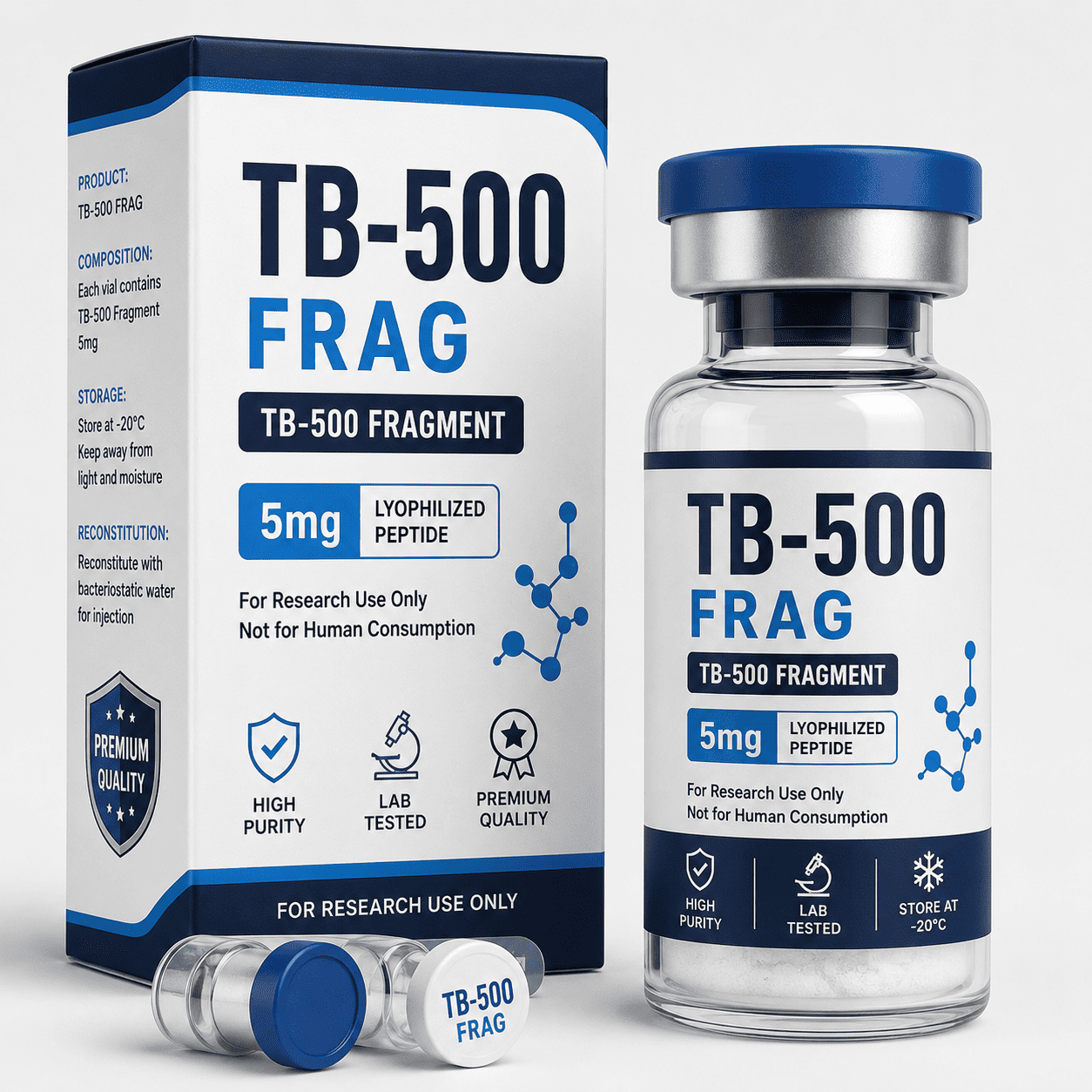
TB-500 Fragment
Ac-LKKTETQ | Thymosin Beta-4 17–23 Fragment | Peptide Research Compound
TB-500 Fragment is a synthetic, N-terminally acetylated heptapeptide corresponding to residues 17–23 of thymosin beta-4 (Tβ4). Its commonly documented sequence is Ac-LKKTETQ, consisting of seven amino acids with N-terminal acetylation. PubChem lists the compound with molecular formula C₃₈H₆₈N₁₀O₁₄ and molecular weight of approximately 889.0 g/mol.
The fragment is relevant to laboratory research involving peptide chemistry, sequence characterization, analytical chemistry, molecular interactions, and comparative peptide studies.
TB-500 Fragment Research Profile
TB-500 Fragment is a short peptide derived from the sequence of full-length thymosin beta-4. The fragment is distinct from the complete 43-amino-acid thymosin beta-4 molecule and should not be described as chemically identical to the parent peptide.
The exact peptide sequence and terminal modifications are important for accurate identification and reproducible laboratory research.
TB-500 Fragment Chemical Information
| Specification | Details |
|---|---|
| Product Name | TB-500 Fragment |
| Alternative Description | Thymosin Beta-4 17–23 Fragment |
| Sequence | Ac-LKKTETQ |
| Sequence Length | 7 amino acids |
| Molecular Formula | C₃₈H₆₈N₁₀O₁₄ |
| Molecular Weight | Approximately 889.0 g/mol |
| CAS | 885340-08-9 |
| Compound Type | Synthetic peptide fragment |
| Parent Peptide | Thymosin Beta-4 |
PubChem records TB-500 with the sequence LKKTETQ and N-terminal acetylation, represented as [acetyl]-LKKTETQ-OH.
TB-500 Fragment Research Applications
TB-500 Fragment may be investigated in controlled laboratory research involving:
- Peptide chemistry
- Peptide sequence characterization
- Molecular characterization
- Analytical identification
- Purity and assay testing
- Peptide stability studies
- Structure–activity research
- Comparative peptide analysis
- Formulation research
- Analytical method development
Key Characteristics
Defined Seven-Amino-Acid Fragment
TB-500 Fragment is a defined heptapeptide with the sequence Ac-LKKTETQ, allowing researchers to characterize the material using appropriate analytical methods.
N-Terminal Acetylation
The Ac designation represents N-terminal acetylation and forms an important part of the compound’s chemical identity.
Analytical Research
Laboratory analysis may evaluate peptide identity, purity, molecular mass, concentration, stability, and degradation characteristics.
Distinct From Full-Length Thymosin Beta-4
Full-length thymosin beta-4 contains 43 amino acids, whereas TB-500 Fragment is a seven-residue peptide. They should therefore be treated as distinct molecular entities when interpreting research results.
TB-500 Fragment Product Specifications
Product Name: TB-500 Fragment
Sequence: Ac-LKKTETQ
Sequence Length: 7 amino acids
Molecular Formula: C₃₈H₆₈N₁₀O₁₄
Molecular Weight: Approximately 889.0 g/mol
CAS Number: 885340-08-9
Compound Type: Synthetic peptide fragment
Parent Peptide: Thymosin Beta-4
Intended Application: Laboratory and analytical research
Quality & Documentation
Depending on the supplied batch, relevant documentation may include:
- Peptide identity
- Sequence information
- Purity or assay
- Molecular-weight confirmation
- Batch or lot number
- Certificate of Analysis (COA)
- Analytical testing
- Stability information
- Product specifications
The actual product label and batch-specific COA should be treated as the definitive source for the material supplied.
TB-500 Fragment vs Thymosin Beta-4
The terms TB-500, TB-500 Fragment, and Thymosin Beta-4 are sometimes used inconsistently in commercial descriptions.
For scientific accuracy, the molecular identity should be determined by the sequence, molecular weight, CAS number, and analytical documentation, /product/tb-500-frag/ rather than by the product name alone. Full-length thymosin beta-4 is a 43-amino-acid peptide, whereas the commonly documented TB-500 fragment is the seven-amino-acid Ac-LKKTETQ sequence.
Important Research Information
TB-500 Fragment is presented as a research peptide for laboratory and analytical applications. Research findings involving full-length thymosin beta-4 should not automatically be interpreted as evidence for the TB-500 fragment, because these are different molecular entities.
This product information is intended for scientific, analytical, compound-identification, and legitimate laboratory research purposes. It does not provide dosing, administration, therapeutic, or performance-enhancement instructions.



Leave a Reply