
Description
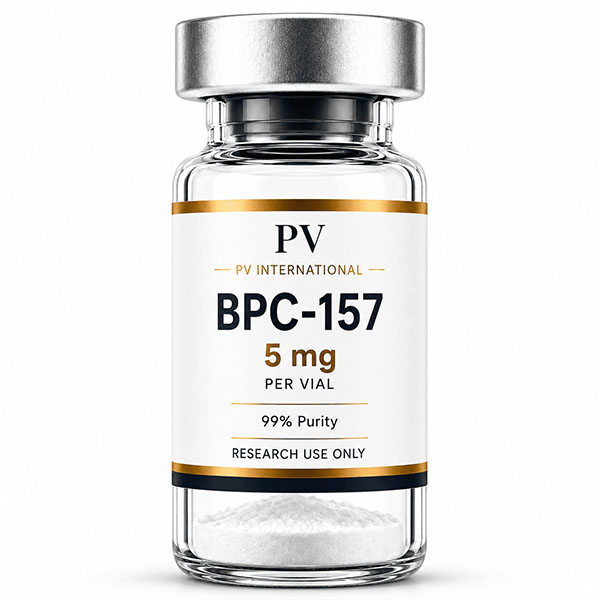
BPC-157
Synthetic Pentadecapeptide | Laboratory & Analytical Research
BPC-157 is a synthetic 15-amino-acid peptide commonly described as a pentadecapeptide. Its documented sequence is GEPPPGKPADDAGLV. PubChem lists BPC-157 under CID 9941957 with molecular formula C₆₂H₉₈N₁₆O₂₂ and molecular weight approximately 1419.5 g/mol.
BPC-157 is of interest in laboratory research involving peptide chemistry, molecular characterization, analytical testing, peptide stability, and biological research models. Published research includes laboratory and animal studies, while human evidence remains limited and should not be represented as established clinical efficacy.
BPC-157 Research Profile
BPC-157 is a linear pentadecapeptide consisting of 15 amino-acid residues. Its sequence is:
Gly-Glu-Pro-Pro-Pro-Gly-Lys-Pro-Ala-Asp-Asp-Ala-Gly-Leu-Val
One-letter sequence:
GEPPPGKPADDAGLV
The defined sequence makes BPC-157 suitable for research involving peptide identification, structural characterization, analytical chemistry, and comparative peptide studies.
BPC-157 Chemical Information
| Specification | Details |
|---|---|
| Product Name | BPC-157 |
| Peptide Type | Synthetic pentadecapeptide |
| Sequence | GEPPPGKPADDAGLV |
| Sequence Length | 15 amino acids |
| Molecular Formula | C₆₂H₉₈N₁₆O₂₂ |
| Molecular Weight | Approximately 1419.5 g/mol |
| CAS Number | 137525-51-0 |
| PubChem CID | 9941957 |
| Research Type | Peptide and analytical research |
These values correspond to the parent BPC-157 molecular entity in PubChem. Salt forms, such as TFA or acetate forms, can have different molecular weights and should be identified from the actual product documentation.
BPC-157 Research Applications
BPC-157 may be investigated in controlled laboratory research involving:
- Peptide chemistry
- Peptide sequence characterization
- Molecular characterization
- Analytical identification
- Purity and assay testing
- Peptide stability studies
- Formulation research
- Comparative peptide analysis
- Molecular and cellular research
- Preclinical research models
Key Characteristics
Defined Pentadecapeptide
BPC-157 is a defined 15-residue peptide with a documented amino-acid sequence, allowing analytical laboratories to evaluate its molecular identity and characteristics.
Peptide Characterization
Research workflows may examine peptide identity, purity, molecular mass, concentration, degradation, and stability using suitable analytical methods.
Analytical Research
BPC-157 can be characterized using appropriate techniques such as chromatographic and mass-spectrometric methods, depending on the research protocol.
Research Documentation
Batch-specific documentation can provide information about the supplied material, including peptide identity, purity, assay, batch number, and analytical testing.
BPC-157 Product Specifications
Product Name: BPC-157
Peptide Type: Synthetic pentadecapeptide
Sequence: GEPPPGKPADDAGLV
Sequence Length: 15 amino acids
Molecular Formula: C₆₂H₉₈N₁₆O₂₂
Molecular Weight: Approximately 1419.5 g/mol
CAS Number: 137525-51-0
PubChem CID: 9941957
Intended Application: Laboratory and analytical research
Quality & Documentation
Depending on the supplied material, documentation may include:
- Peptide identity
- Amino-acid sequence
- Purity or assay
- Molecular-weight information
- Batch or lot number
- Certificate of Analysis (COA)
- HPLC or other analytical testing
- Stability information
- Product specifications
The actual product label and batch-specific COA should be treated as the definitive source /product/bpc-157/ for the exact material supplied.
BPC-157 Research Evidence
BPC-157 has been investigated in preclinical research, including laboratory and animal studies. PubChem currently indexes research relating to BPC-157 and also notes an associated clinical trial record. However, the existence of research or a clinical trial should not be interpreted as proof of established safety or effectiveness for human treatment.
This product information is provided for scientific, analytical, compound-identification, and legitimate laboratory research purposes. It does not provide dosing, administration, treatment, or therapeutic-use instructions.

GHK-CU-50mgTB500-10mgBPC157-10mgKPV-10mg-Blend-500x500.jpg)

Leave a Reply