
Description
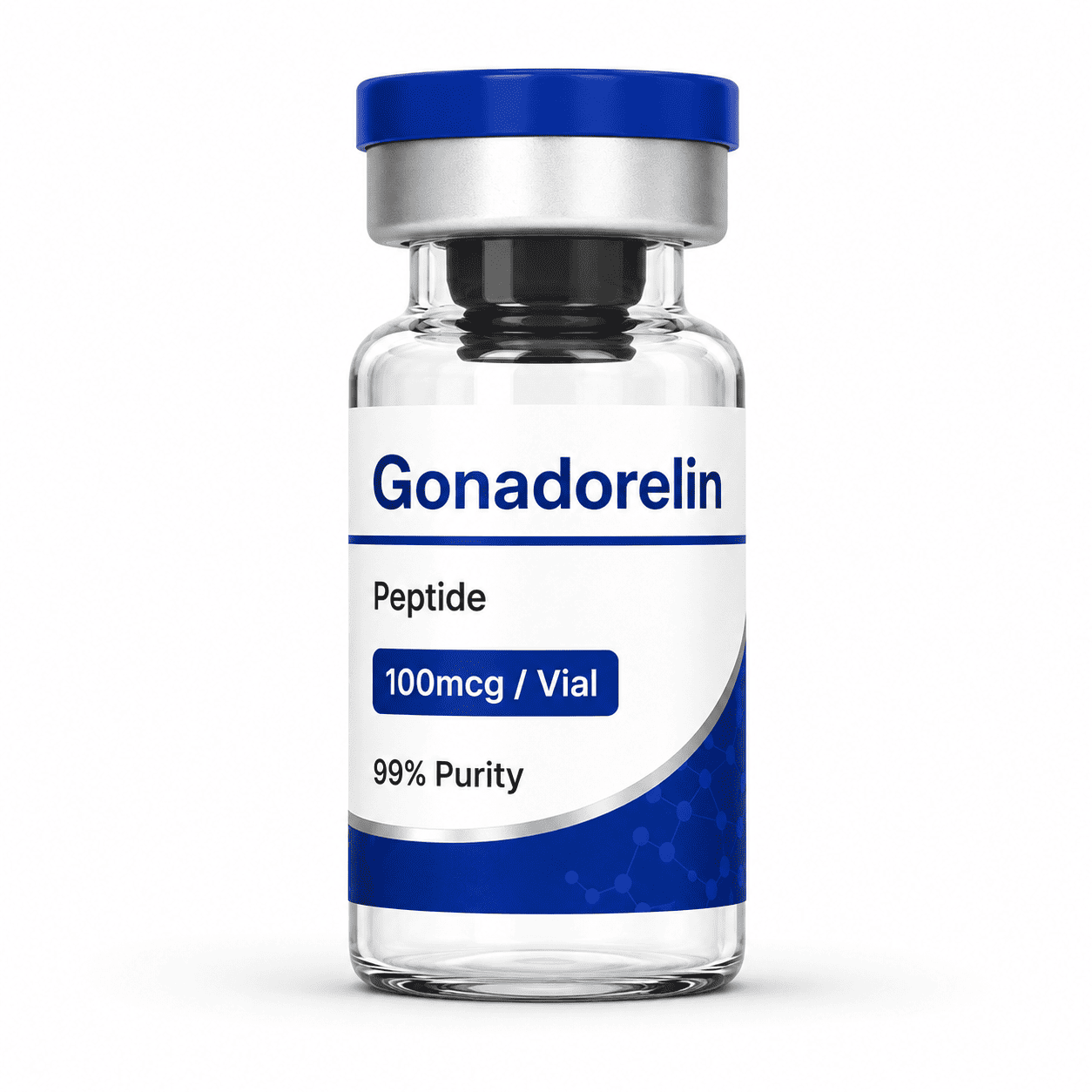
Gonadorelin
Product Overview
Gonadorelin is a synthetic peptide that is structurally identical to the naturally occurring Gonadotropin-Releasing Hormone (GnRH). It is widely used in scientific and clinical research to study the regulation of the hypothalamic-pituitary-gonadal (HPG) axis and reproductive hormone signaling. Researchers utilize Gonadorelin to investigate hormone secretion, endocrine function, fertility mechanisms, and reproductive physiology. Gonadorelin is intended for research and authorized clinical applications where applicable and should only be used according to relevant regulations.
Key Features
- Synthetic Gonadotropin-Releasing Hormone (GnRH)
- High-purity research peptide
- Suitable for endocrine and reproductive research
- Studied in hormone regulation and fertility research
- Stable formulation under recommended storage conditions
- Available in multiple research quantities
How It Works
Gonadorelin binds to GnRH receptors located in the anterior pituitary gland, stimulating the release of Luteinizing Hormone (LH) and Follicle-Stimulating Hormone (FSH). These hormones regulate reproductive function, including gonadal hormone production and gamete development. Researchers use Gonadorelin to better understand hormonal regulation, reproductive physiology, and endocrine signaling.
Research Applications
Gonadorelin is commonly studied in research involving:
- Endocrine system research
- Reproductive hormone regulation
- Fertility studies
- Hypothalamic-pituitary-gonadal (HPG) axis research
- Luteinizing Hormone (LH) secretion
- Follicle-Stimulating Hormone (FSH) regulation
- Reproductive physiology
- Hormonal signaling pathways
- Neuroendocrinology
- Peptide pharmacology
Specifications
| Property | Details |
|---|---|
| Product Name | Gonadorelin |
| Synonyms | GnRH, Gonadotropin-Releasing Hormone |
| CAS Number | 33515-09-2 |
| Molecular Formula | C55H75N17O13 |
| Molecular Weight | 1182.29 g/mol |
| Product Type | Synthetic Peptide |
| Research Category | Endocrine & Reproductive Research |
Physical Properties
- Appearance: White to off-white lyophilized powder
- Purity: Research Grade
- Solubility: Soluble in sterile water or suitable laboratory buffers
- Stability: Stable under recommended storage conditions
Storage Instructions
- Store refrigerated at 2–8°C before reconstitution.
- For long-term storage, keep frozen according to manufacturer recommendations.
- Protect from excessive heat, moisture, and direct sunlight.
- Keep the vial tightly sealed when not in use.
- Avoid repeated freeze-thaw cycles after reconstitution.
Packaging Information
Available packaging options may include:
- 2 mg Vial
- 5 mg Vial
- 10 mg Vial
- Multi-vial research kits
- Bulk research quantities
Quality Assurance
Each production batch undergoes strict quality control testing for:
- Identity verification
- Peptide purity
- Sterility testing (where applicable)
- Batch consistency
- Stability assessment
Precautions
- Intended for laboratory research or authorized clinical use only.
- Handle using appropriate laboratory safety procedures.
- Wear suitable personal protective equipment (PPE).
- Store according to the recommended conditions.
- Keep out of reach of unauthorized personnel.
Shelf Life
Shelf life depends on storage conditions and manufacturer specifications. Refer to the product label or Certificate of Analysis (COA) for expiration details and recommended storage requirements.
Frequently Asked Questions (FAQs)
What is Gonadorelin?
Gonadorelin is a synthetic version of Gonadotropin-Releasing Hormone (GnRH) used in endocrine and reproductive research to study hormone regulation and reproductive physiology.
What research areas commonly use Gonadorelin?
Researchers commonly study Gonadorelin in fertility research, endocrine function, reproductive hormone regulation, neuroendocrinology, and HPG axis investigations.
How should Gonadorelin be stored?
Store refrigerated at 2–8°C before reconstitution and follow the manufacturer’s storage recommendations for long-term preservation.
Is a Certificate of Analysis (COA) available?
Most research-grade manufacturers provide a Certificate of Analysis (COA) with each batch to verify purity, identity, and quality.

GHK-CU-50mgTB500-10mgBPC157-10mgKPV-10mg-Blend-500x500.jpg)
Reviews
There are no reviews yet.