
Description
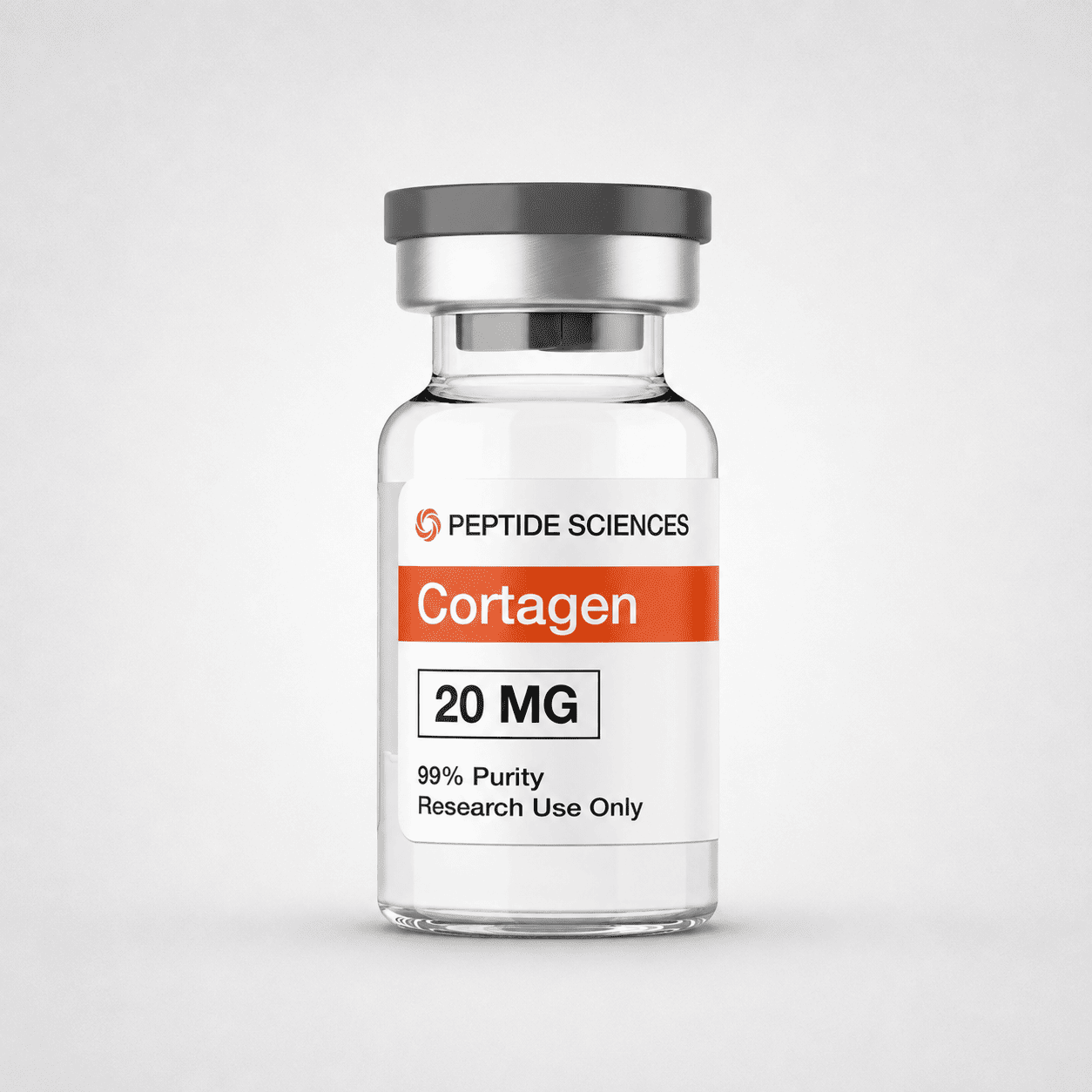
Cortagen
Synthetic Tetrapeptide | Experimental Research Compound
Cortagen is a synthetic tetrapeptide also known as Ala-Glu-Asp-Pro (AEDP). Researchers study Cortagen in peptide chemistry, molecular biology, biochemical research, and experimental neuroscience. In particular, published research has examined this short peptide in models involving nerve regeneration, gene expression, cellular signaling, and related biological pathways.
The available evidence remains primarily preclinical and laboratory-based. Therefore, researchers should distinguish findings from animal or in-vitro studies from established human clinical evidence.
Key Characteristics of Cortagen
- Compound: Cortagen
- Peptide Sequence: Ala-Glu-Asp-Pro (AEDP)
- Compound Type: Synthetic tetrapeptide
- Research Areas: Peptide chemistry, molecular biology, cellular signaling, and experimental neuroscience
- Intended Use: Laboratory and analytical research
- Molecular Formula: C₁₇H₂₆N₄O₉
- Molecular Weight: 430.4 g/mol
Research Profile
Researchers investigate Cortagen to better understand the molecular characteristics and biological behavior of short peptide sequences. For example, preclinical research has examined the compound in experimental nerve-regeneration models and cellular studies of gene expression.
Additionally, laboratory studies have explored Cortagen alongside related short peptides in cellular and molecular research. However, these experimental findings do not establish equivalent effects in humans.
Research Applications
Researchers may investigate Cortagen in areas such as:
- Peptide structure and characterization
- Nerve-regeneration research
- Cellular signaling studies
- Gene-expression research
- Experimental neuroscience
- Molecular biology
- Comparative peptide research
- Analytical characterization
- In-vitro and animal-model studies
Furthermore, researchers can compare Cortagen (AEDP) with other short peptides to examine differences in molecular structure and experimental responses.
Cortagen and Neural Research
One published animal study examined Cortagen in a rat sciatic-nerve regeneration model and reported changes in nerve-fiber growth and conduction velocity. Because this work involved rats, the findings should be treated as preclinical evidence rather than proof of human efficacy.
Other research has examined Cortagen in relation to gene-expression changes and cellular signaling. Consequently, the compound remains of interest as an experimental tool for studying peptide-related molecular mechanisms.
Cortagen Peptide Research
AEDP peptide research can include investigations of peptide identity, molecular structure, stability, and biological activity under controlled experimental conditions.
Moreover, researchers can use appropriate analytical methods to characterize the supplied material and compare its properties with related tetrapeptides.
Analytical and Quality Information
For laboratory applications, researchers should review the applicable product documentation and Certificate of Analysis (COA). Depending on the batch and research objective, quality assessment may include:
- Identity confirmation
- Purity or assay
- Peptide sequence
- Molecular characterization
- Batch or lot information
- Stability assessment
- Appearance and formulation information
Therefore, batch-specific documentation should take priority over generic specifications from third-party sources.
Product Specifications
| Specification | Details |
|---|---|
| Product Name | Cortagen |
| Sequence | Ala-Glu-Asp-Pro (AEDP) |
| Category | Synthetic tetrapeptide |
| Form | Lyophilized powder |
| Molecular Formula | C₁₇H₂₆N₄O₉ |
| Molecular Weight | 430.4 g/mol |
| Current Listed Quantity | 20 mg × 10 vials; bulk option available |
The current DC Trading Peptide page lists Cortagen as a lyophilized synthetic peptide and currently shows 20 mg × 10 vials and a larger bulk option.
Quality and Documentation
The current product page states that the material undergoes identity, purity, stability, and batch-consistency assessments and lists refrigerated storage at 2–8°C. Those product-specific claims should remain on the page only when the applicable batch documentation supports them.
Researchers should review the current COA and supplier documentation before using the material in analytical or experimental workflows.
Frequently Asked Questions
What Is Cortagen?
Cortagen is a synthetic tetrapeptide with the sequence Ala-Glu-Asp-Pro (AEDP). Researchers study it in peptide, molecular, cellular, and experimental neuroscience research.
What Is the Cortagen Peptide Sequence?
The sequence is Ala-Glu-Asp-Pro (AEDP).
What Research Areas Study Cortagen?
Research has examined Cortagen in peptide chemistry, nerve-regeneration models, gene-expression studies, cellular signaling, and experimental neuroscience.
Is Cortagen a Proven Human Treatment?
The available literature is predominantly preclinical and laboratory-based. Researchers should therefore avoid interpreting animal or in-vitro findings as established human therapeutic effects.
Is a Certificate of Analysis Available?
A batch-specific Certificate of Analysis may provide information about identity, purity, assay, and other analytical characteristics. Researchers should review the documentation supplied with the applicable batch.
Important Research Disclaimer
Cortagen is an experimental research peptide intended strictly for laboratory and analytical purposes. It is not intended for human or veterinary consumption, diagnosis, treatment, prevention, or mitigation of disease.
Research findings involving Cortagen should be interpreted according to the experimental model and study design. In particular, findings from animal or in-vitro studies should not be presented as established evidence of human safety or efficacy. Researchers should follow appropriate laboratory safety procedures, institutional requirements, and applicable regulations.


Leave a Reply