
Description
AICAR (Acadesine)
AMPK Research Compound | Metabolic and Cellular Research
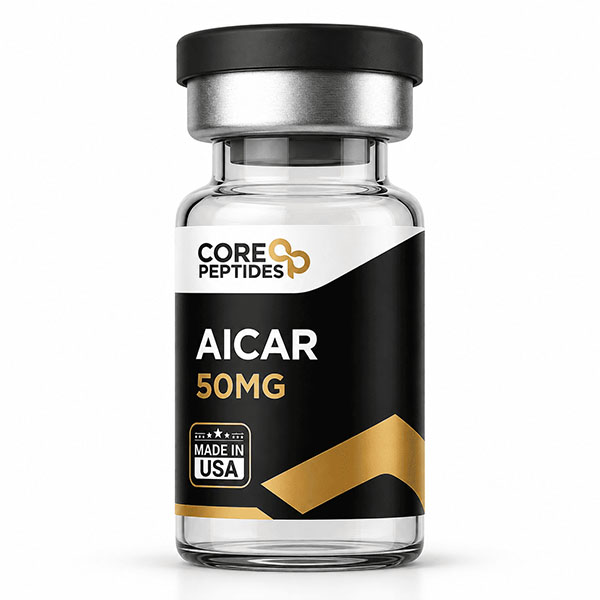
AICAR is a research compound also known as Acadesine or AICA-riboside. Researchers use AICAR as a biochemical tool to investigate AMP-activated protein kinase (AMPK) signaling, cellular energy metabolism, glucose-related pathways, lipid metabolism, and mitochondrial biology. (pubchem.ncbi.nlm.nih.gov)
AICAR enters cells and can be converted to AICA ribotide (ZMP), an AMP-related metabolite that influences AMPK signaling. Therefore, researchers can use AICAR to investigate energy-sensing pathways under controlled experimental conditions. However, studies also report AMPK-independent effects, so experimental results should be interpreted according to the specific model and assay used. (pubmed.ncbi.nlm.nih.gov)
AICAR Key Characteristics
- Compound: AICAR
- Also Known As: Acadesine, AICA-riboside
- Compound Type: Purine nucleoside analogue
- Primary Research Pathway: AMPK-related signaling
- Research Areas: Cellular metabolism, energy signaling, biochemical research, and mitochondrial studies
- Intended Use: Laboratory and analytical research
In addition, PubChem lists AICAR/Acadesine with the molecular formula C₉H₁₄N₄O₅, molecular weight 258.23 g/mol, and CAS 2627-69-2. (pubchem.ncbi.nlm.nih.gov)
AICAR Research Applications
Researchers may investigate AICAR in controlled laboratory studies involving:
- AMPK signaling
- Cellular energy sensing
- Glucose metabolism
- Lipid and fatty-acid metabolism
- Mitochondrial function
- Metabolic pathway research
- Cell-culture studies
- Biochemical assays
- Comparative metabolic research
Furthermore, AICAR has become a widely used experimental tool for studying AMPK-related mechanisms. Researchers can therefore use it in mechanistic studies designed to examine how cells respond to changes in energy status. (pubmed.ncbi.nlm.nih.gov)
Acadesine Research Profile
Acadesine is the established chemical name associated with AICAR/AICA-riboside. After cellular uptake, cells can phosphorylate AICA-riboside to form ZMP, which can mimic some effects of AMP within the AMPK system. Consequently, researchers can study downstream metabolic signaling using AICAR as an experimental pharmacological tool. (pubmed.ncbi.nlm.nih.gov)
However, published research has also identified AMPK-independent effects of AICAR. For that reason, researchers should not automatically attribute every observed biological response to AMPK activation alone. (pubmed.ncbi.nlm.nih.gov)
Metabolic and Cellular Research
AICAR research covers several areas of cellular metabolism. For example, researchers may examine glucose utilization, lipid metabolism, mitochondrial activity, and cellular adaptation under experimental conditions.
Additionally, AICAR can serve as a reference compound in studies comparing different AMPK-modulating approaches. The observed response can vary according to cell type, experimental model, concentration, exposure conditions, and assay design.
AICAR Research Advantages
AMPK Pathway Research
It provides a widely studied experimental tool for investigating AMPK-related signaling and cellular energy regulation.
Metabolic Research
Researchers can examine pathways associated with glucose handling, lipid metabolism, and cellular energy balance.
Mitochondrial Research
The Product can be incorporated into experimental models examining mitochondrial activity and metabolic adaptation.
Broad Laboratory Utility
Because researchers have used AICAR across biochemical and cellular models, it can support comparative and mechanistic research involving energy-sensing pathways.
AICAR Analytical and Quality Information
For laboratory applications, researchers should review the Certificate of Analysis (COA) and applicable batch documentation. Depending on the research requirements, documentation may include:
- Compound identity
- Purity or assay
- Concentration
- Molecular characterization
- Stability information
- Batch or lot number
- Analytical test results
Moreover, researchers should confirm that the supplied material corresponds to AICAR/Acadesine (AICA-riboside) and not the separate phosphorylated compound AICA ribotide/ZMP. These are chemically distinct materials. (pubchem.ncbi.nlm.nih.gov )
Product Information
The current product page lists 50 mg × 10 vials and a larger bulk-kit option. Product availability and packaging should be confirmed against the current listing and batch documentation. (dctradingpeptide.com)
Frequently Asked Questions
What Is AICAR?
It is a research compound also known as Acadesine or AICA-riboside. Researchers study it primarily as a biochemical tool for investigating AMPK-related signaling and cellular metabolism.
Is AICAR the Same as Acadesine?
Yes. Acadesine is a recognized name for AICAR/AICA-riboside. (pubchem.ncbi.nlm.nih.gov)
Is AICAR the Same as ZMP?
No. It is phosphorylated inside cells to form AICA ribotide (ZMP). ZMP is therefore a different chemical form from the starting nucleoside. (pubmed.ncbi.nlm.nih.gov)
What Research Areas Use AICAR?
Researchers use AICAR in experimental studies involving AMPK signaling, cellular energy metabolism, glucose and lipid pathways, mitochondrial biology, and biochemical assays.
Is AICAR a Peptide?
No. It is a small nucleoside analogue, not a peptide. (pubchem.ncbi.nlm.nih.gov)
Important Research Disclaimer
Product is an experimental research compound intended strictly for laboratory and analytical purposes. It is not intended for human or veterinary consumption, diagnosis, treatment, disease prevention, weight management, endurance enhancement, or performance enhancement.
Research findings can vary according to experimental conditions, and AICAR may produce both AMPK-dependent and AMPK-independent effects. Therefore, researchers should interpret results within the context of the specific experimental model and follow applicable laboratory safety procedures and regulations.



Leave a Reply