
Description
PTD-DBM
Introduction
PTD-DBM (Protein Transduction Domain–Dishevelled Binding Motif) is a synthetic fusion peptide developed for scientific research. It combines a protein transduction domain (PTD) with a Dishevelled-binding motif (DBM) and has been investigated in laboratory studies involving the Wnt/β-catenin signaling pathway. PTD-DBM is an investigational compound and is not approved as a therapeutic medicine in many jurisdictions. Current evidence is primarily limited to preclinical research.
Research-grade PTD-DBM is manufactured using controlled peptide synthesis and purification processes designed to support product identity, purity, and batch consistency.
Product Overview
| Specification | Details |
|---|---|
| Product Name | PTD-DBM |
| Full Name | Protein Transduction Domain–Dishevelled Binding Motif |
| Category | Synthetic Fusion Peptide |
| Peptide Type | Research Peptide |
| Form | Lyophilized Powder* |
| Appearance | White to Off-White Powder |
| Purity | Batch Specific |
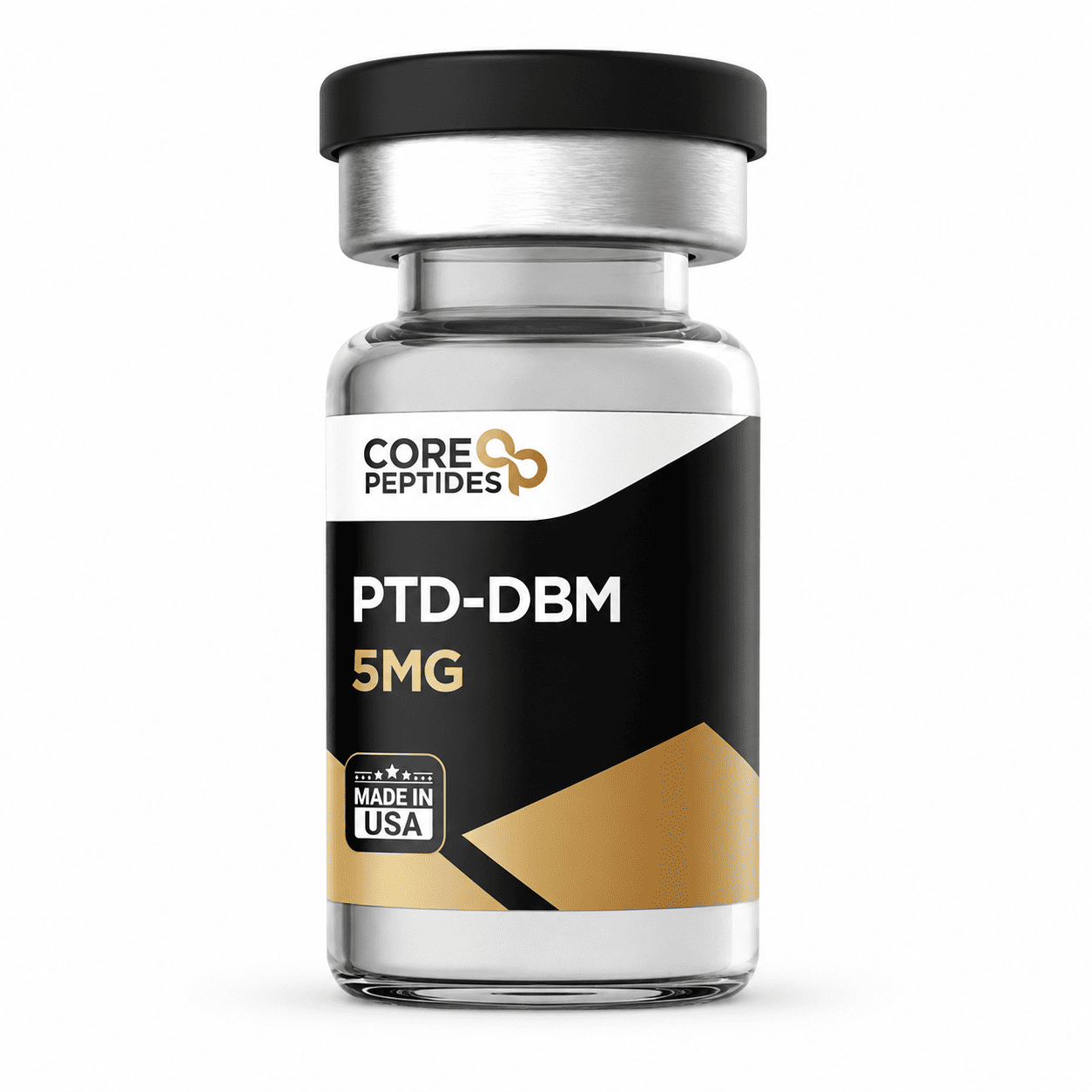
| Packaging | Sterile Glass Vial |
| Storage | Store Refrigerated at 2°C–8°C |
*Presentation may vary depending on the manufacturer or intended research application.
Manufacturing Standards
PTD-DBM is produced using precision peptide synthesis followed by advanced purification techniques designed to support molecular integrity and manufacturing consistency.
Manufacturing processes commonly include:
- Precision peptide synthesis
- Advanced purification methods
- Controlled manufacturing environments
- Batch traceability
- Comprehensive analytical quality testing
Quality Assurance
Each production batch is typically evaluated through quality control procedures that may include:
- Identity verification
- Purity assessment
- Appearance inspection
- Stability evaluation
- Batch consistency testing
- Packaging inspection
These procedures help support reliable manufacturing standards and product integrity.
Physical Characteristics
Typical characteristics include:
- White to off-white lyophilized powder
- Stable peptide formulation under recommended storage conditions
- Sterile vial presentation
- Uniform product appearance
- Clearly labeled packaging
Packaging
Products are generally supplied in protective laboratory packaging that may include:
- Sterile sealed glass vial
- Tamper-evident closure
- Product identification label
- Batch number for traceability
- Protective outer packaging
Storage Recommendations
To help preserve product quality:
- Store refrigerated at 2°C–8°C.
- Protect from direct sunlight.
- Avoid excessive heat and moisture.
- Keep the vial tightly sealed until use.
- Store in the original packaging.
- Do not use if the vial or packaging has been damaged.
Product Features
- Synthetic fusion peptide
- Controlled peptide synthesis
- Advanced purification processes
- Comprehensive analytical quality testing
- Batch traceability
- Sterile laboratory packaging
- Stable formulation under recommended storage conditions

Leave a Reply