
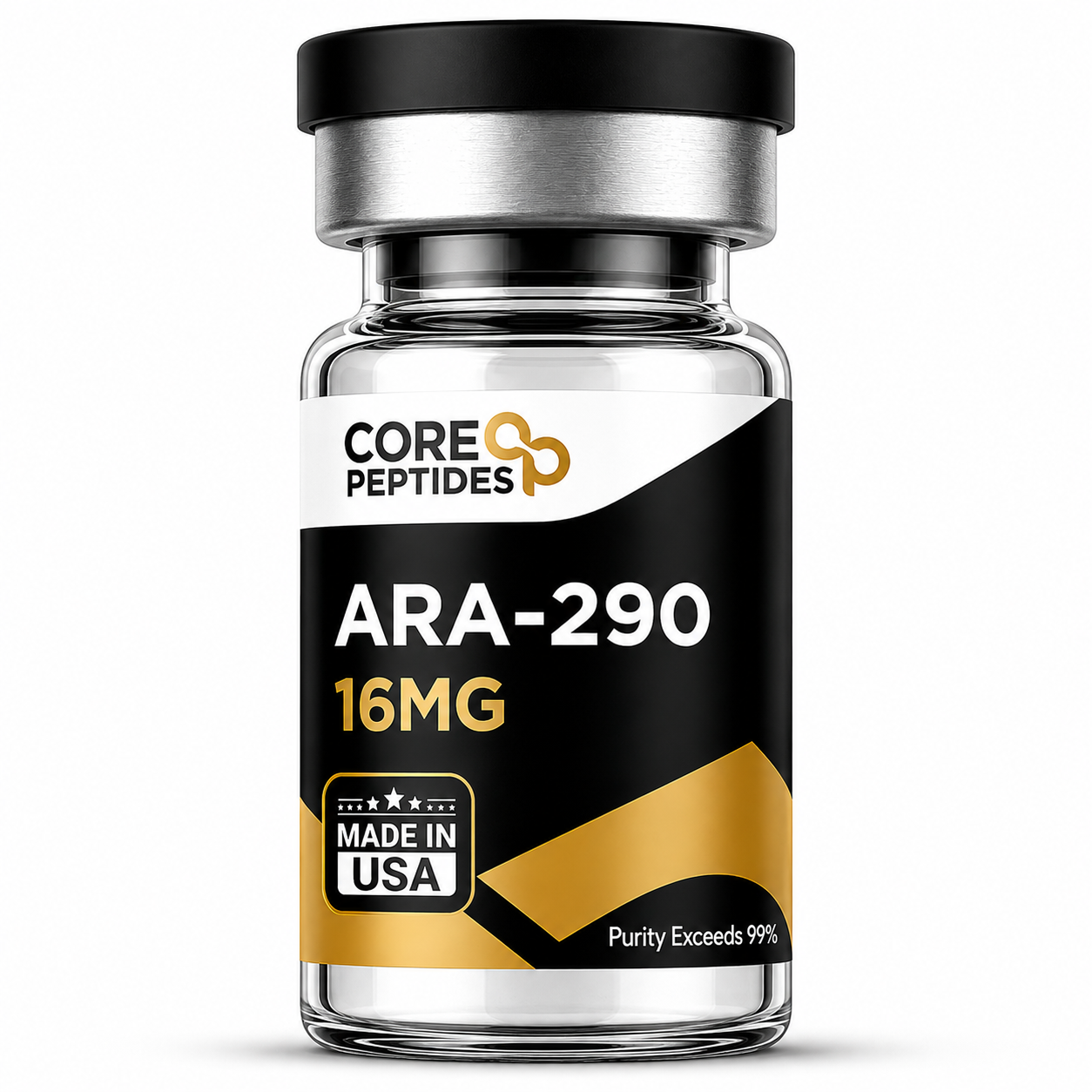
Description
ARA-290
Erythropoietin-Derived Peptide | Neurobiology and Tissue-Protection Research
ARA-290 is an experimental 11-amino-acid peptide derived from the helix-B region of erythropoietin (EPO). Researchers study ARA-290 in neurobiology, inflammatory signaling, tissue-protection research, and related cellular pathways. The peptide is also known as pHBSP (pyroglutamate helix-B surface peptide).
Unlike full-length erythropoietin, ARA-290 represents a shorter EPO-derived research molecule designed to investigate selected tissue-related signaling mechanisms. Therefore, researchers can use this peptide in controlled studies that examine receptor interactions, cellular responses, and molecular pathways.
Key Characteristics of ARA-290
- Compound: ARA-290
- Also Known As: pHBSP, pyroglutamate helix-B surface peptide
- Peptide Length: 11 amino acids
- Origin: Derived from the helix-B region of erythropoietin
- Compound Type: Synthetic research peptide
- Primary Research Areas: Neurobiology, inflammatory signaling, tissue-protection pathways, and cellular research
- Intended Use: Laboratory and analytical research
Research Profile
Researchers investigate ARA-290 to understand signaling pathways associated with tissue protection and cellular responses. In particular, preclinical studies have examined this peptide in models involving nerve injury, inflammation, ischemia, and metabolic processes.
Additionally, researchers have explored ARA-290 in clinical research settings. However, experimental and clinical findings should remain distinct from established approved therapeutic uses.
Research Applications
Researchers may study ARA-290 in controlled laboratory and preclinical research involving:
- Neurobiology and peripheral nerve research
- Inflammatory signaling studies
- Tissue-protection mechanisms
- Cellular repair research
- Receptor-signaling investigations
- Ischemia-related experimental models
- Metabolic pathway research
- Peptide structure–activity studies
- Comparative EPO-derived peptide research
Furthermore, researchers can compare ARA-290 with full-length EPO and other EPO-derived peptides to examine differences in molecular structure and signaling characteristics.
pHBSP Research and Molecular Signaling
It refers to pyroglutamate helix-B surface peptide and is associated with ARA-290 research. Researchers investigate this peptide to better understand how a defined EPO-derived structure can interact with tissue-related signaling pathways.
As a result, ARA-290 research can provide a useful experimental model for studying peptide–receptor interactions, cellular signaling, and molecular responses under controlled conditions.
Neurobiology and Cellular Research
Product has been investigated in experimental models involving peripheral nerve injury and other neurological research areas. For example, preclinical studies have examined changes in sensory responses and cellular signaling following experimental exposure to the peptide.
However, these findings come from specific experimental models and should not be interpreted as established human therapeutic effects. Similarly, results can vary according to the model, study design, exposure conditions, and analytical methods.
Research Advantages
Defined EPO-Derived Peptide
It provides researchers with a defined short peptide derived from the structural region of erythropoietin’s helix B.
Targeted Signaling Research
Researchers can investigate ARA-290 in studies involving tissue-related signaling, receptor interactions, and downstream cellular responses.
Neurobiology Research
Experimental models can use ARA-290 to examine peripheral nerve biology, inflammatory pathways, and related cellular mechanisms.
Comparative EPO Research
Researchers can compare ARA-290 with full-length EPO and related peptides to investigate differences in structure, signaling, and biological characteristics.
Analytical and Quality Information
For laboratory applications, researchers should review the applicable Certificate of Analysis (COA) and batch-specific documentation. Depending on the product and research objective, documentation may include:
- Peptide identity
- Purity or assay
- Molecular characterization
- Concentration
- Batch or lot number
- Stability information
- Storage requirements
Moreover, researchers should verify the supplied material against its documentation before starting an experimental workflow.
ARA-290 Product Information
The current product listing provides 10 mg × 10 vials and a larger bulk option. Product quantities and availability may change; therefore, researchers should confirm the current listing and applicable batch documentation before purchase.
Frequently Asked Questions
What Is ARA-290?
It is an experimental 11-amino-acid peptide derived from the helix-B region of erythropoietin. Researchers study it in neurobiology, inflammatory, tissue-protection, and metabolic research.
What Is pHBSP?
It stands for pyroglutamate helix-B surface peptide and refers to the EPO-derived peptide associated with ARA-290.
What Research Areas Study ARA-290?
Researchers investigate ARA-290 in neurobiology, inflammatory signaling, peripheral nerve studies, tissue-protection models, receptor research, and related cellular pathways.
Is ARA-290 the Same as Erythropoietin?
No. It is a short EPO-derived peptide, whereas erythropoietin is a larger glycoprotein hormone. Researchers study ARA-290 as a distinct molecular research tool.
Is ARA-290 an Approved Treatment?
It has appeared in preclinical and clinical research; however, experimental findings should not be presented as evidence of an approved treatment or as established therapeutic benefits.
Important Research Disclaimer
It is an experimental research peptide intended strictly for laboratory and analytical purposes. It is not intended for human or veterinary consumption, diagnosis, treatment, prevention, or mitigation of disease.
Researchers should distinguish preclinical findings from clinical evidence and evaluate results according to the specific study design and experimental model. In addition, laboratories should follow applicable safety procedures, storage requirements, institutional policies, and regulatory requirements.



Leave a Reply