
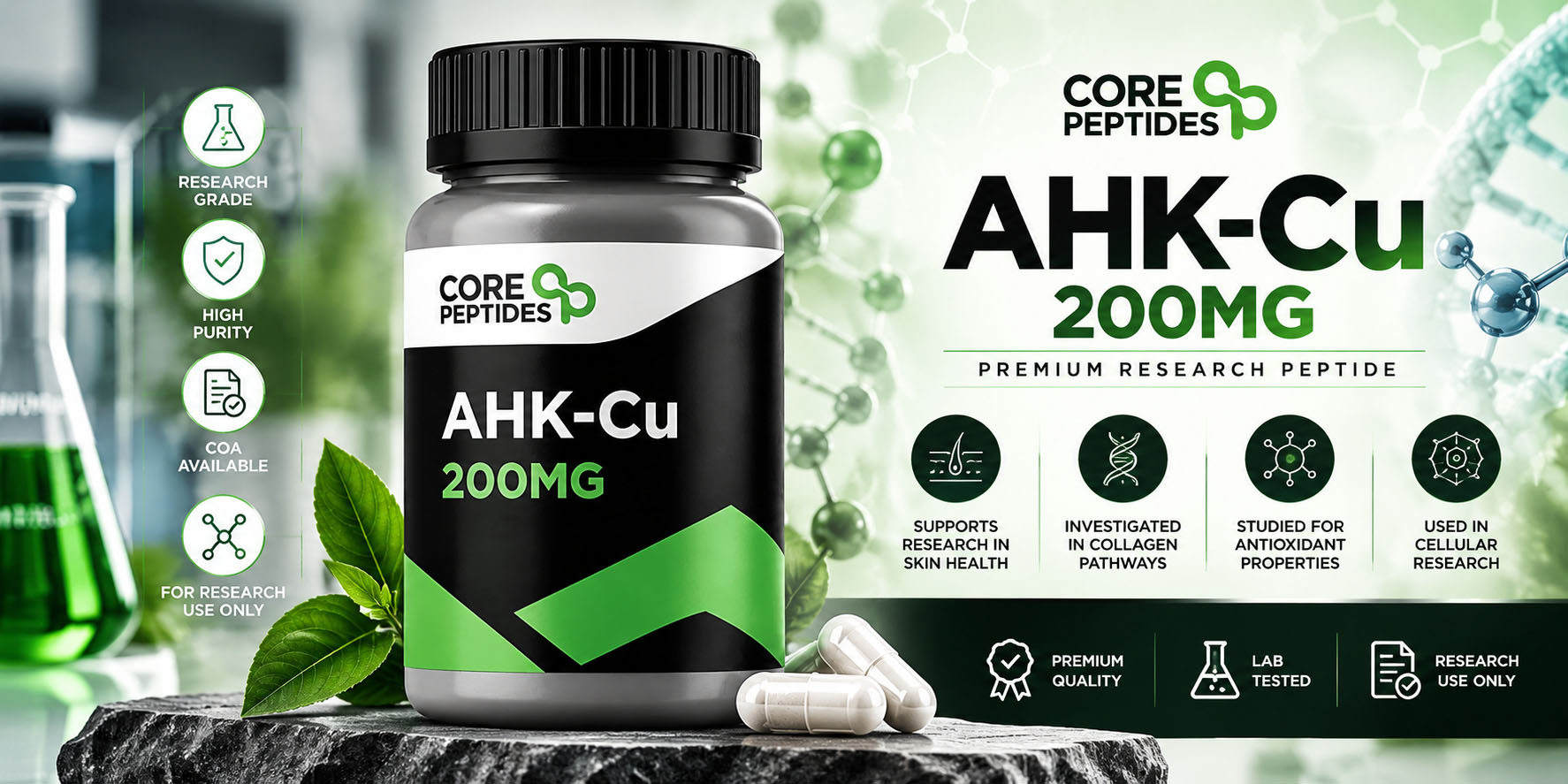
Potential Benefits of AHK-Cu 200 mg
AHK-Cu (Alanine-Histidine-Lysine Copper) is a copper-containing peptide that has attracted interest in skin, hair, cellular, and regenerative research. AHK-Cu is studied for its potential role in biological pathways associated with collagen production, skin structure, cellular signaling, and antioxidant activity. Researchers are particularly interested in how copper-associated peptides may interact with processes involved in maintaining healthy skin and supporting tissue-related mechanisms.
Research interest also includes the potential relationship between AHK-Cu and collagen-related pathways, skin appearance, cellular protection, and hair-follicle biology. These areas remain subjects of scientific investigation, and potential research findings should not be presented as established therapeutic benefits in humans.
Key Research Areas
- Skin and collagen research
- Cellular signaling research
- Antioxidant-related research
- Tissue and regenerative research
- Hair and follicle research
Demand for AHK-Cu 200 mg
The demand for AHK-Cu 200 mg is connected to increasing interest in peptide research, cosmetic science, skin biology, and regenerative research. Research laboratories and organizations studying peptide-based mechanisms may investigate AHK-Cu to better understand copper-dependent biological processes and their relationship with skin and cellular pathways.
AHK-Cu is also of interest within the broader cosmetic and peptide research market, where researchers are exploring innovative ingredients and compounds associated with collagen and skin-health mechanisms. For professional research applications, factors such as purity, compound identification, batch testing, Certificate of Analysis (COA), storage conditions, and supplier documentation can be important when evaluating research materials.
Important Research Disclaimer
AHK-Cu should be presented according to its research status and should not be marketed as a proven medicine or guaranteed treatment for hair loss, wrinkles, skin conditions, or other medical conditions. Human safety and clinical effectiveness depend on the specific formulation and application and should be evaluated through appropriate scientific and regulatory processes.

Leave A Comment