
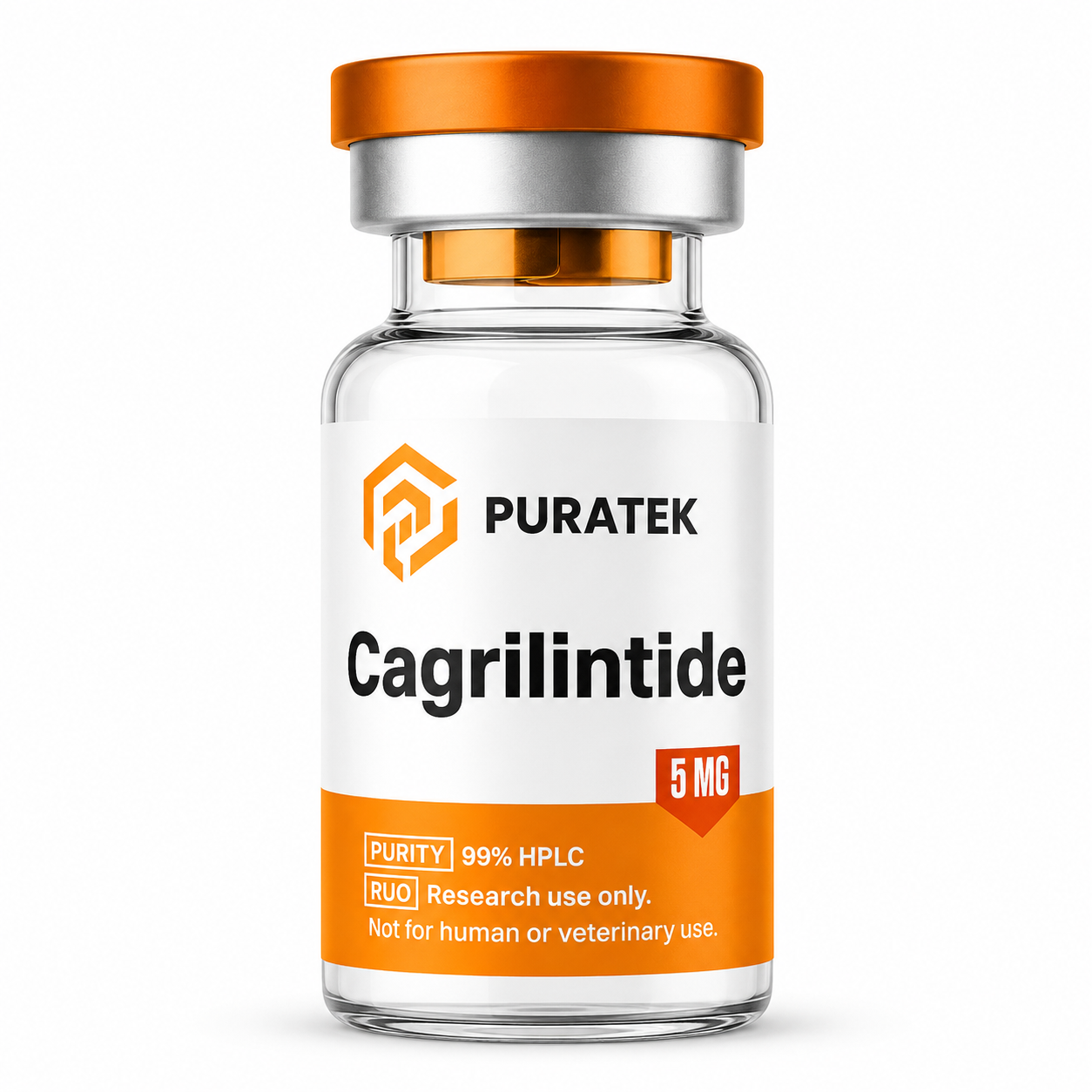
Description
Cagrilintide
Long-Acting Amylin Analogue | Experimental Metabolic Research Peptide
Cagrilintide is a long-acting synthetic analogue of the pancreatic hormone amylin. It has been investigated for its activity at amylin-related receptors and its effects on satiety, appetite regulation, food intake, glucose metabolism, and body weight.
Cagrilintide is an investigational compound rather than an established standalone approved medicine. It has been extensively studied in clinical trials, both independently and in combination with the GLP-1 receptor agonist semaglutide as CagriSema.
Key Characteristics
- Product: Cagrilintide
- Compound Type: Long-acting amylin analogue
- Primary Research Area: Metabolic and obesity research
- Target System: Amylin-receptor signaling
- Research Areas: Appetite regulation, satiety, glucose metabolism, metabolic signaling, and body-weight research
- Development Status: Investigational
Mechanism & Research Profile
Amylin is a pancreatic hormone involved in satiety and regulation of food intake. Cagrilintide was designed as a longer-acting amylin analogue and has been investigated for its ability to influence amylin receptor signaling. Experimental research has also examined brain amylin receptor pathways associated with reductions in food intake and body weight.
Clinical research has demonstrated that once-weekly cagrilintide can produce dose-dependent reductions in body weight in people with overweight or obesity, while gastrointestinal adverse events such as nausea and other digestive symptoms have been reported.
Research Applications
Cagrilintide may be investigated in controlled research involving:
- Amylin receptor signaling
- Appetite and satiety pathways
- Food-intake regulation
- Metabolic physiology
- Glucose homeostasis
- Body-weight regulation
- Obesity pharmacology
- Combination metabolic therapy research
- Pharmacokinetic and pharmacodynamic studies
- Peptide stability and analytical characterization
Research Advantages
Long-Acting Amylin Research Model
Provides a defined experimental analogue for studying prolonged amylin-related signaling.
Metabolic Research Utility
Useful for investigating relationships between satiety signaling, food intake, glucose regulation, and body-weight changes.
Extensive Clinical Research
Cagrilintide has progressed through substantial clinical investigation, providing researchers with a relatively extensive evidence base compared with many experimental peptides.
Combination Research
Cagrilintide has also been extensively studied together with semaglutide. In a 2025 phase 3 study, the combination produced significantly greater weight reduction than placebo in adults with overweight or obesity and type 2 diabetes.
Potential Research Areas
Research may include:
- Appetite-control mechanisms
- Satiety signaling
- Amylin receptor biology
- Metabolic signaling
- Glucose regulation
- Adiposity and body-weight research
- Obesity pharmacology
- Combination peptide therapies
- Pharmacokinetics
- Pharmacodynamics
- Peptide formulation and stability
Product Specifications
| Specification | Details |
|---|---|
| Product Name | Cagrilintide |
| Category | Long-acting amylin analogue |
| Research Focus | Metabolic & obesity research |
| Primary Target | Amylin receptor pathways |
| Development Status | Investigational |
| Form | Peptide formulation |
| Intended Application | Laboratory, analytical & clinical research |
Quality & Documentation
For research-grade material, batch documentation should ideally include:
- Peptide identity
- Purity/assay
- Peptide content
- Molecular characterization
- Batch or lot number
- Certificate of Analysis (COA)
- Stability information
- Relevant analytical testing
Safety & Regulatory Disclaimer
Cagrilintide is an investigational pharmacologically active peptide and should not be marketed as an approved weight-loss treatment or dietary supplement. Clinical studies have reported gastrointestinal adverse events, including nausea and other digestive symptoms.
The U.S. FDA has also issued a 2026 warning letter concerning the marketing of cagrilintide as an unapproved new drug in the United States.
This description is provided for scientific, product-identification, and legitimate research purposes. It does not provide dosing or administration instructions and does not recommend non-prescribed human use.
GHK-CU-50mgTB500-10mgBPC157-10mgKPV-10mg-Blend-500x500.jpg)


Leave a Reply