
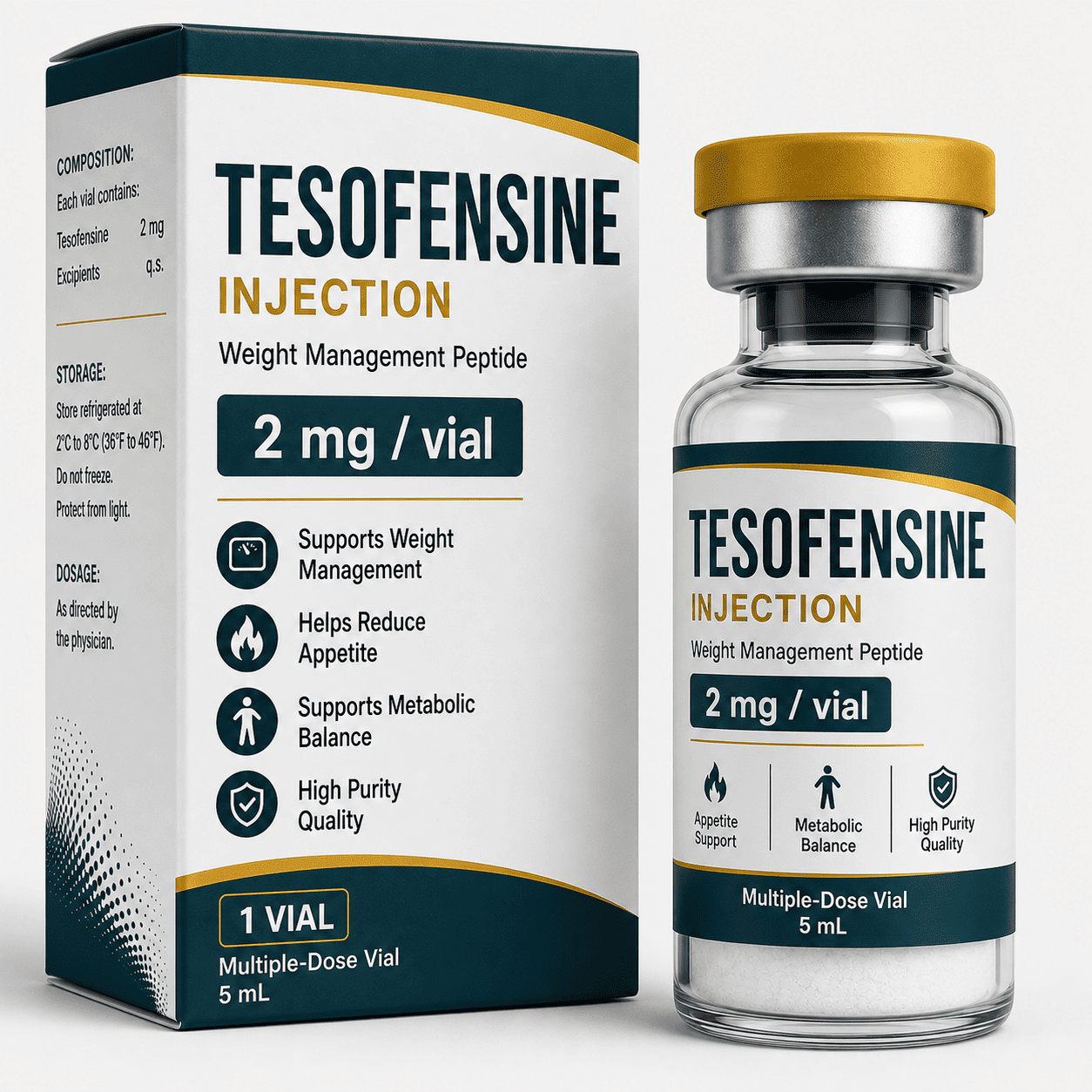
Description
Tesofensine
Product Overview
Tesofensine is a synthetic small-molecule compound classified as a triple monoamine reuptake inhibitor (TRI). It inhibits the reuptake of dopamine (DA), norepinephrine (NE), and serotonin (5-HT), making it a valuable research compound in neuroscience, metabolism, and obesity studies. Researchers investigate Tesofensine for its effects on appetite regulation, energy expenditure, body weight, and central nervous system signaling. Tesofensine remains an investigational compound and is intended for laboratory and scientific research purposes only.
Key Features
- Triple monoamine reuptake inhibitor (TRI)
- High-purity research-grade compound
- Non-peptide small molecule
- Studied in metabolic and neuroscience research
- Supports investigations of appetite regulation and energy balance
- Available in multiple research quantities
How It Works
Tesofensine inhibits the reuptake of dopamine (DA), norepinephrine (NE), and serotonin (5-HT) by blocking their respective transporters. This increases the availability of these neurotransmitters within the central nervous system. Researchers study these mechanisms to better understand appetite regulation, energy homeostasis, body weight management, reward pathways, and metabolic physiology.
Research Applications
Tesofensine is commonly studied in research involving:
- Obesity research
- Appetite regulation
- Energy metabolism
- Weight management
- Neuroscience
- Dopamine signaling
- Serotonin biology
- Norepinephrine signaling
- Metabolic disorders
- Neuropharmacology
Specifications
| Property | Details |
|---|---|
| Product Name | Tesofensine |
| Product Type | Synthetic Small Molecule |
| Drug Class | Triple Monoamine Reuptake Inhibitor (TRI) |
| Molecular Formula | C17H23Cl2NO |
| Molecular Weight | 328.28 g/mol |
| Research Category | Metabolic & Neuroscience Research |
Physical Properties
- Appearance: White to off-white crystalline powder or capsule/tablet formulation
- Purity: Research Grade
- Stability: Stable under recommended storage conditions
- Suitable for laboratory research applications
Storage Instructions
- Store at 20–25°C in a cool, dry place.
- Protect from excessive heat, moisture, and direct sunlight.
- Keep the container tightly sealed.
- Store according to the manufacturer’s recommendations.
- Avoid prolonged exposure to humidity.
Packaging Information
Available packaging options may include:
- 250 mcg Capsules
- 500 mcg Capsules
- 1 mg Capsules
- Bottle Packaging
- Bulk research quantities
Quality Assurance
Each production batch undergoes comprehensive quality control testing for:
- Identity verification
- Purity analysis
- Stability assessment
- Batch-to-batch consistency
- Quality inspection
Precautions
- Intended for laboratory research purposes only.
- Not approved for general therapeutic use in many jurisdictions.
- Handle using appropriate laboratory safety procedures.
- Wear suitable personal protective equipment (PPE).
- Store according to recommended conditions.
- Keep out of reach of unauthorized personnel.
Shelf Life
Shelf life depends on storage conditions and manufacturer specifications. Refer to the product label or Certificate of Analysis (COA) for expiration details and recommended storage requirements.
Frequently Asked Questions (FAQs)
What is Tesofensine?
Tesofensine is an investigational synthetic small molecule that inhibits the reuptake of dopamine, norepinephrine, and serotonin. It is widely studied in laboratory research involving metabolism, obesity, and neuroscience.
What research areas commonly use Tesofensine?
Researchers commonly investigate Tesofensine in obesity research, appetite regulation, energy metabolism, weight management, dopamine signaling, serotonin biology, neuropharmacology, and metabolic disorders.
How should Tesofensine be stored?
Store at 20–25°C in a cool, dry place, protected from heat, moisture, and direct sunlight. Keep the container tightly sealed.
Is a Certificate of Analysis (COA) available?
Most research-grade manufacturers and suppliers provide a Certificate of Analysis (COA) with each production batch to verify identity, purity, stability, and overall product quality.
-500x500.png)

Reviews
There are no reviews yet.